home
North Flushing colonials
North of Northern Boulevard, larger colonials, Tudors, and capes on private lots — good candidates for additions, dormers, and full gut renovations.
Housing stock, multi-family realities, DOB permits and legal ADUs, and realistic 2026 costs for kitchen, bathroom, and gut renovations across Flushing.
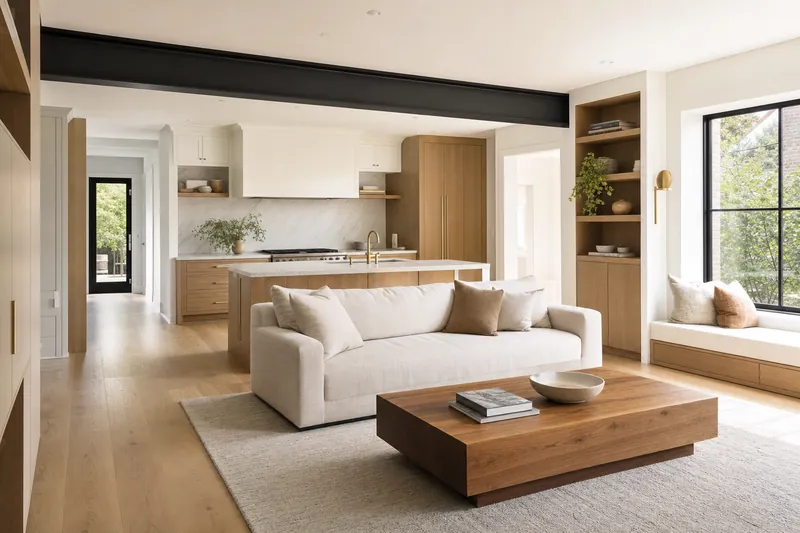
Flushing has one of the widest housing-stock ranges in Queens. Downtown Flushing is dense with multi-family apartment buildings and newer condo development, while North Flushing and the surrounding residential blocks are dominated by larger single-family colonials, Tudors, and post-war capes. Renovation here can mean a high-rise co-op kitchen or a full single-family gut.
A defining issue in Flushing is multi-family use. Many single-family and two-family homes have been informally subdivided or have basement apartments — some legal, some not. If you're remodeling with the intent to add a rental unit or accessory dwelling, the legal path matters: unpermitted units are a serious code-violation and insurance risk.
This guide covers the housing stock, the projects homeowners take on, permit and legal-ADU realities, 2026 costs, and realistic timelines for remodeling in Flushing.
The building type and its legal use shape what's possible.
North of Northern Boulevard, larger colonials, Tudors, and capes on private lots — good candidates for additions, dormers, and full gut renovations.
Downtown Flushing has dense multi-family and co-op buildings. Renovations here resemble other Queens co-op work: board approvals and shared systems.
Older homes often have a patchwork of updated and original plumbing and electrical. A renovation is frequently the moment to bring systems up to code.
Many Flushing homes have basements suited to legal accessory dwelling units — but only with proper DOB permits, egress, and a Certificate of Occupancy change.
What Flushing homeowners actually take on.
Consistently the top project, in both the single-family homes and the downtown apartments. Layout changes are common where plumbing allows.
Frequent in older homes where original baths need full replacement — moving wet walls where the layout benefits from it.
Buyers of older Flushing colonials often gut and reconfigure entirely, updating systems and opening up compartmentalized layouts.
Creating a legal accessory unit — with proper permits, egress, and a Certificate of Occupancy — is a common goal, and one that requires doing it by the book.
NYC Department of Buildings: Kitchens, bathrooms, gut renovations, and any plumbing, electrical, gas, or structural work require DOB permits. Layout and structural changes need a licensed architect or professional engineer to file plans. Creating a legal basement apartment or ADU requires its own permits, egress windows, separate kitchenette and bath, and often a new or amended Certificate of Occupancy.
Legal vs. illegal units: An unpermitted basement or accessory apartment is a serious code violation. It can trigger DOB violations, Con Edison and insurance issues, and make a property hard to sell or refinance. If a home you're renovating has an existing unpermitted unit, the safe path is to legalize it (bring it to code and obtain the proper C of O) or remove it — not to remodel around it.
Zoning for additions: Flushing single-family lots are subject to NYC zoning for floor-area ratio, yard setbacks, and height. Additions that exceed these limits may require a variance, which is a public-hearing process with no guarantee of approval.
Flushing kitchen remodels typically run $45,000–$85,000 mid-range and $90,000–$180,000+ for a luxury gut. Bathrooms run $20,000–$40,000 standard. See the kitchen cost guide and bathroom cost guide.
Full-house gut renovations are priced per square foot — typically $200–$275/sq ft mid-range, higher with system upgrades. A legal basement or ADU conversion commonly runs $40,000–$90,000+ depending on whether it requires excavation, egress, and a Certificate of Occupancy change; see the home additions guide.
The biggest cost variables in Flushing are system upgrades (older mixed plumbing/electric), legalizing basement units, and layout changes that require DOB filings.
Single-family Flushing projects avoid co-op board delays but still need DOB permit filings (2–6 weeks) and, for legal ADUs, a Certificate of Occupancy process that can add months. Order cabinetry and fixtures 6–12 weeks before demo.
Active construction: a kitchen 4–8 weeks, a bathroom 2–3 weeks, a full-house gut 8–16 weeks, and a legal basement conversion 6–12 weeks depending on excavation and egress work.
Possibly, but only through the legal process. A legal accessory unit needs DOB permits, proper egress, a separate kitchenette and bath, and often a new or amended Certificate of Occupancy. An unpermitted unit is a code violation that can trigger fines and insurance and resale problems. If you have an existing unpermitted unit, the safe path is to legalize it or remove it.
Yes for any plumbing, electrical, gas, or layout change. A licensed architect or engineer files plans with the DOB for layout and structural work, and your contractor pulls the work permits. Cosmetic-only swaps sometimes don't require a permit, but anything touching systems does.
Gut renovations are priced per square foot — typically $200–$275/sq ft mid-range and $275–$400+/sq ft for luxury. System upgrades and layout changes push costs higher. See the gut renovation cost guide for the full tier breakdown.
Including permitting, a kitchen remodel often takes 8–14 weeks, a bathroom 5–9 weeks, and a full-house gut 4–6 months. Legal basement or ADU conversions can take longer because of the Certificate of Occupancy process.
Yes. Reading this guide and requesting an estimate are free. Queens Reno Guide is a referral service: when you request an estimate, we connect you with a licensed remodeling contractor serving Flushing and Queens. We may receive a referral fee from the contractor, at no cost to you.
Queens Reno Guide publishes local cost data and connects homeowners with licensed contractors across Queens, New York.
Tell us about your project and we'll connect you with a licensed, insured Queens contractor for a free, no-obligation estimate.
Thanks — we'll connect you with a licensed Queens contractor shortly. Keep an eye on your email and phone.