Foundation & structure
Footings, foundation walls, and framing are the largest single cost. Soil conditions, rock, and depth all affect foundation pricing — especially on lots with rock or poor soil conditions.
Independent 2026 cost ranges for garages, dormers, second stories, ADUs, and room additions across Queens — zoning, permits, and free estimates from licensed local contractors.
Addition costs vary widely by type. Ranges below reflect typical pricing from licensed contractors across Queens. Final cost depends on size, foundation work, and whether utilities need to be extended.
Additions require filed architectural and structural plans, DOB or town permits, and often zoning review. On narrow Queens lots, limited access can mean materials move by hand — which adds labor. Always get a fixed-scope contract.
Additions are structural, ground-up work. These six factors have the biggest impact on your budget.
Footings, foundation walls, and framing are the largest single cost. Soil conditions, rock, and depth all affect foundation pricing — especially on lots with rock or poor soil conditions.
NYC zoning — floor-area ratio, yard setbacks, and height limits — dictates what you can build. If your plan exceeds limits, a variance adds months.
Additions require filed architectural and structural plans, stamped by a licensed professional, plus DOB or town building permits before any work starts.
Extending electrical, plumbing, and HVAC into the new space — and sometimes upgrading your panel or service capacity to handle the added load.
A garage or basement is far cheaper than a dormer, second story, or ground-up room. Each addition type has a different structural and MEP footprint.
On narrow Queens lots, heavy equipment can't reach the rear — materials move by hand, raising labor. Property-line setbacks, trees, and drainage also shape scope.
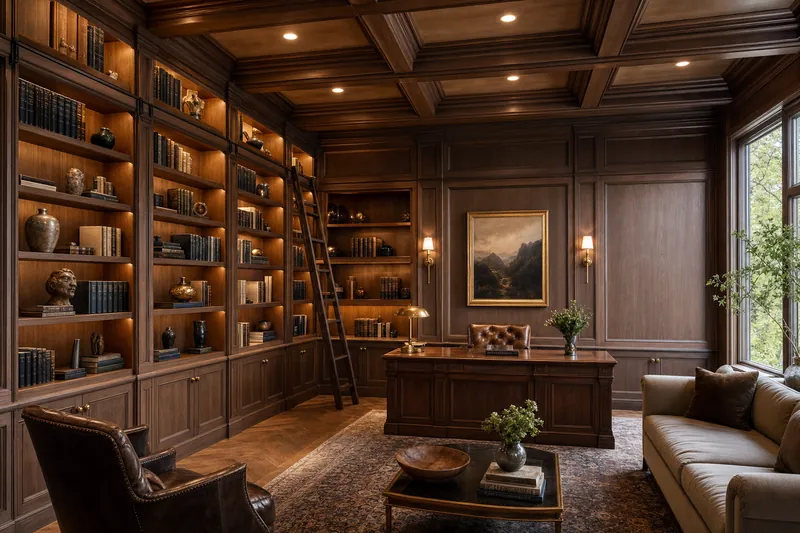
Custom millwork and finish work from real local remodeling projects. Additions combine new structure with high-level interior finishing.
ExampleThree steps, all free. We connect you with a vetted Queens remodeling contractor — you decide whether to move forward.
Share your borough, size, what you want to change, and your rough budget. Takes about two minutes.
A licensed and insured Queens contractor experienced in home additions reaches out to schedule a free on-site estimate.
Review a written, itemized quote with scope, timeline, and payment schedule. No obligation, no pressure.
Queens Reno Guide is an independent resource — not a contractor's sales site. We publish real local cost data so homeowners can plan realistically, then connect you with a licensed contractor when you're ready.
It depends on type: a garage addition runs about $30,000–$70,000; finishing or digging out a basement $40,000–$90,000+; a dormer or second story $150,000–$400,000+; an ADU/in-law apartment $200,000–$500,000+; and a ground-up room addition $300,000–$700,000+. Foundation, structural, and MEP work drive most of the cost.
Yes — always. Additions require stamped architectural and structural plans filed with the NYC Department of Buildings, plus permits before construction. Skipping this is illegal and blocks a Certificate of Occupancy.
NYC zoning controls floor-area ratio (FAR), yard setbacks, and building height. If your planned addition exceeds these limits, you may need a variance from the Board of Standards and Appeals — a public hearing process that adds time and has no guarantee of approval.
Design and permitting typically take 2–6 months, and construction 3–9 months depending on size, season, and inspections. A second-story or large ground-up addition takes longer than a garage or basement finish.
Usually yes — added square footage and improved living space typically increase your home's assessed value and therefore your property taxes. A local contractor or architect can give a rough estimate; NY tax assessors re-evaluate after a new CO is issued.
Possibly. NYC has rules for accessory dwelling units and separate living quarters. A legal ADU needs its own kitchenette, bath, and entrance, and often a separate Certificate of Occupancy. Check current local rules before designing.
Queens Reno Guide publishes local cost data and connects homeowners with licensed contractors across Queens, New York.
Tell us about your project and we'll connect you with a licensed, insured Queens contractor for a free, no-obligation estimate.
Thanks — we'll connect you with a licensed Queens contractor shortly. Keep an eye on your email and phone.